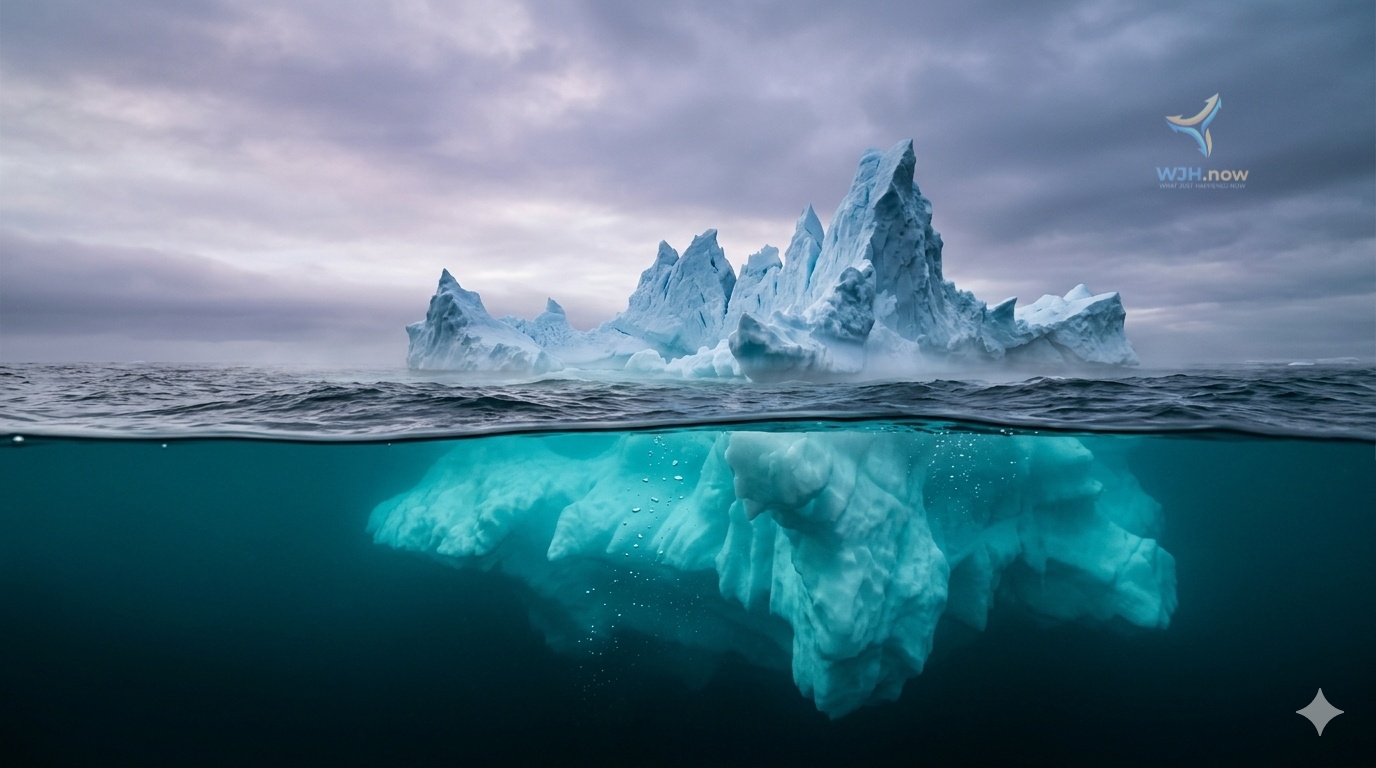
Satellites Watched Earth Lose 12.5 Trillion Tons of Ice Since 1979
Greenland and Antarctica have lost 12.5 trillion tons of ice since 1979. Enough to bury the entire continental US under 5 feet of ice, coast to coast. And we watched it happen from space.
This is not a model or a prediction. This is what 27 satellites actually saw over 47 years.
What 47 Years of Satellite Data Shows
The new study was published in Scientific Data by the IMBIE team — that’s the Ice Sheet Mass Balance Inter-Comparison Exercise, a joint project by NASA and the European Space Agency.
They combined 42 independent estimates from 27 different satellite missions. Earlier studies only went back to the 1990s. This team dug into the old Landsat archive, the longest Earth imaging program we have, and pushed Greenland’s record back to 1972 and Antarctica’s back to 1979.
What did they find? For almost 20 years, not much. The ice sheets were fairly stable through the 1970s, 1980s and 1990s. Then the losses started piling up. In the 2010s, it really took off.
Why Greenland and Antarctica Are Melting So Fast
Most people think hot air melts ice from the top. That’s only a small part of it.
84% of this ice loss comes from warm ocean water melting the ice sheets from underneath and from the sides. The water gets under the glaciers, loosens them, and they start sliding faster into the ocean. Scientists call this dynamic ice loss, and it is more abrupt than surface melting.
Greenland’s Jakobshavn glacier is now retreating up to 164 feet per day. That number was confirmed by lead author Ines Otosaka from Northumbria University.
This is why scientists are worried about tipping points. As Otosaka says, dynamic loss can trigger unstable, irreversible change.
How Much Did Sea Levels Rise?
All that ice became water. About 3 quadrillion gallons of water.
That alone raised global sea level by just over an inch — 31 millimeters — since 1979. Greenland is responsible for about 0.7 inches of that, Antarctica for the rest.
An inch sounds small until you hear this stat: for every third of an inch of sea level rise, another 2 to 3 million people face flooding at least once a year, according to Otosaka.
This matters more if you live on the coast.
I am from the south-west coast of India, so I read that line differently. Just up the coast, Mumbai flooded twice this monsoon — once in late June and again in early July. Local trains stopped, roads were blocked, daily life was thrown off. Those were rain floods, not sea floods. But in 2021, during a similar downpour, tides in Mumbai hit 4.6 meters and the rainwater could not drain. That is exactly how a higher sea level makes rain flooding worse.
Did Ice Loss Pause Between 2020 and 2023?
Yes, briefly. And that confused a lot of people online.
Between 2020 and 2023, the total ice loss numbers seemed to stall. The authors say this was short-term weather, not a trend change. Record snowfall in East Antarctica offset fast melting in West Antarctica.
The study ends in 2023, but Otosaka says newer measurements show acceleration is back. Co-author Eric Rignot from UC Irvine calls that 2020-2023 period a blip.
David Holland from NYU, who was not part of the study, said the pattern looks like what a collapsing, unstable ice sheet would show.
Why Ice Will Keep Melting For Decades
There is a lag. Co-author Andrew Shepherd from Northumbria says the ice sheets react to warming with a delay of decades. So even if we stopped heating tomorrow, the melting would likely continue for decades.
Ted Scambos from the University of Colorado, also not involved in the study, put it simply: we know where this is heading, and we still have not acted like it.
I do not have a neat ending for this. It just makes you rethink how we have treated nature, and how much we have taken for granted.